Our People
The Collaborative
Our network includes community practitioners, researchers, professors, activists, consultants, Ph.D. students, and active IRB/ERC members. Together, we bridge academic, community, philanthropic, and institutional spaces. We examine and address the structural tensions between feminist research practices - particularly in the Global South - and conventional, positivist review mechanisms like Institutional Review Boards (IRBs) and Ethics Review Committees (ERCs). The Feminist Ethics Collaborative creates space to challenge dominant assumptions, share knowledge, and advance more just, relational, and context-responsive approaches to research ethics. We envision a research ecosystem in which diverse ways of knowing are recognized, valued, and supported across communities, academia, philanthropy, and research institutions.
Partners in Change
Our strategy engages three groups whose decisions and practices shape the research ethics ecosystem:
Researchers
We support researchers with practical guidance, toolkits, shared language, and we convene spaces where they can share pitfalls, exchange advice, and address common ethical barriers, tensions, and dilemmas together.
Ethics Review Bodies
We work directly with ethics review committees and institutional review boards to co-develop tools, learning modules, and practices that strengthen reviewers’ capacity to assess feminist, participatory, and decolonial research.
Funders
We engage funders and philanthropic institutions to examine how funding requirements and rigid compliance processes affect research in practice. We encourage approaches that provide greater flexibility, trust, and support for locally grounded ethical decision-making.
Core Team
Dr. Ruth Nekura
Dr. Judith Diers
Dr. Laura Hinson
Jean Zamora
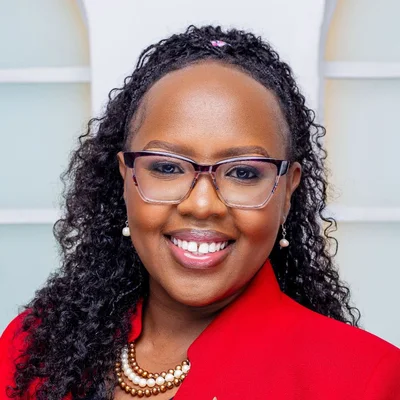
Dr. Ruth Nekura is a feminist lawyer and researcher with 14 years of experience working on human rights and gender justice in Africa. Trained in public international law, substantive equality, and qualitative research, she bridges feminist research, legal analysis and trauma-informed policy development to challenge systemic inequalities. As a consultant she has supported diverse actors from grassroots movements to international organisations through research, advocacy, community mobilisation, and strategic litigation to advance social justice, including the Trust for Indigenous Culture and Health (TICAH), Kenya Network of Organisations Working on Women and Girls with Disabilities, Equality Effect, Equality Now, Fos Feminista, Atlantic Fellowship(TEKANO), UN Women and WHO among others. Across roles at the Initiative for Strategic Litigation in Africa (ISLA), the Coalition on Violence Against Women (COVAW) and the Centre for Law and Society, she worked to advance state accountability for rights violations with a focus on gender justice, disability rights, climate justice and indigenous rights. She co-leads the Feminist Ethics Collaborative, bringing a commitment to transforming research ethics through analysing power in knowledge production to challenge patriarchal, eurocentric and positivist epistemologies.
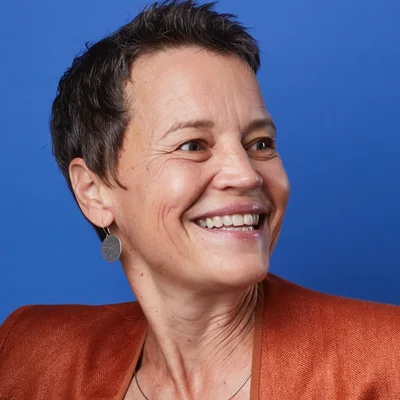
Dr. Judith Diers is a researcher, strategist, and philanthropic leader with more than 30 years of experience spanning academia, international development, the United Nations, and philanthropy. Trained in demography, gender, public policy, and ethics, her work bridges quantitative research, storytelling, feminist methodologies, and a commitment to challenging traditional hierarchies of evidence and knowledge. Across roles at the Population Council, UNICEF, the Ford Foundation, and the LEGO Foundation, she has worked to advance the rights and wellbeing of adolescent girls, non-binary youth, and young feminists, bringing an intersectional lens grounded in disability justice and lived experience. She is a longtime member of the Population Council’s Institutional Review Board and brings to the Feminist Ethics Collaborative a commitment to transforming research ethics so that feminist, participatory, and community-held ways of knowing are recognized and valued.
Dr. Laura Hinson is a researcher, evaluator, and philanthropic strategist with more than 18 years of experience in global public health research and philanthropy. Her work bridges mixed-methods evaluation, measurement design, and participatory approaches to translating evidence into strategy that centers the priorities of adolescent girls and young people. At the International Center for Research on Women, she led multi-country studies and developed measurement frameworks on gender norms, reproductive empowerment, positive youth development, and technology-facilitated gender-based violence. She later directed a girls' education portfolio at the Wellspring Philanthropic Fund, translating field evidence into grant-making strategy in East Africa and Central America. A former member of ICRW's Institutional Review Board, she joins the Feminist Ethics Collaborative with a belief that rigorous evidence and feminist, participatory ways of knowing are not in tension but should build on each other.
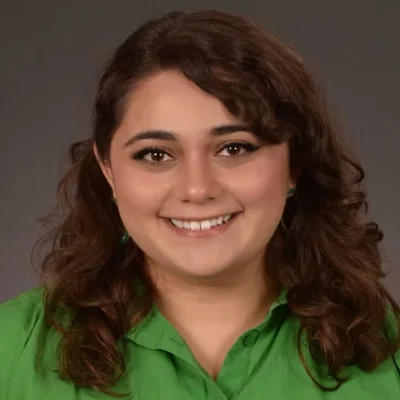
Jean Zamora is a researcher, evaluator, and philanthropic strategist with more than 18 years of experience in global public health research and philanthropy. Her work bridges mixed-methods evaluation, measurement design, and participatory approaches to translating evidence into strategy that centers the priorities of adolescent girls and young people. At the International Center for Research on Women, she led multi-country studies and developed measurement frameworks on gender norms, reproductive empowerment, positive youth development, and technology-facilitated gender-based violence. She later directed a girls' education portfolio at the Wellspring Philanthropic Fund, translating field evidence into grant-making strategy in East Africa and Central America. A former member of ICRW's Institutional Review Board, she joins the Feminist Ethics Collaborative with a belief that rigorous evidence and feminist, participatory ways of knowing are not in tension but should build on each other.